
Estimated reading time: 4 minutes
Key Takeaways
- Performance vs. Price: Carbon wheels offer superior aerodynamic performance and lower weight, making them ideal for competitive racing and climbing, but at a significantly higher cost.
- Durability and Reliability: Aluminum wheels provide excellent durability, reliability, and value. They can withstand impacts by denting rather than cracking, making them a practical choice for everyday training, commuting, and rough terrain.
- Speed Matters: The aerodynamic advantages of carbon wheels are most pronounced at higher speeds, typically above 35 km/h, saving riders significant watts and time over long distances.
- Braking Evolved: While aluminum historically offered better braking, especially in wet conditions, the widespread adoption of disc brakes has largely neutralized this difference, making braking performance comparable on modern bikes.
- The Right Choice: The best wheelset depends entirely on your riding style, performance goals, and budget. Competitive racers will benefit from carbon, while budget-conscious and casual riders will find aluminum to be a dependable and cost-effective solution.
Table of Contents
- I. Introduction & Definitions
- II. Performance Comparison: Carbon Wheels vs Aluminum Wheels
- III. Durability & Longevity
- IV. Cost Analysis: Are Carbon Wheels Worth It?
- V. Which Wheels Are Best for You?
- VI. Practical Framework for Decision-Making
- VII. Conclusion
- VIII. Frequently Asked Questions
Carbon vs Aluminum Wheels: What’s Best for Your Riding Style?
Wheels are one of the most impactful upgrades any cyclist can make. For those looking to improve performance, tackling the decision between carbon vs aluminum wheels is critical. The choice between carbon wheels vs aluminum wheels can directly influence weight, acceleration, ride feel, handling, and aerodynamics. But are carbon wheels worth it?
This detailed guide breaks down the pros, cons, and considerations of carbon and aluminum wheels to help you make an informed decision.
I. Introduction & Definitions
What Are Aluminum Wheels?
Aluminum wheels are constructed from metal alloys that are extruded, shaped into rims, welded together, and machined into their final form to produce a finished wheelset. Aluminum rims historically dominated the market due to their durability, reliability, and accessibility. (Source: Canyon)
What Are Carbon Wheels?
Carbon wheels, by contrast, are engineered using layers of carbon fiber laid into molds and cured under heat and pressure. This process allows manufacturers to create complex shapes and custom stiffness profiles that deliver superior aerodynamic performance and weight savings. (Source: Canyon)
Why This Comparison Matters?
While upgrading wheels may seem like a single component upgrade, their impact can be transformative for cyclists. From improving acceleration to enhancing climbing ability and optimizing aerodynamics, wheels play a pivotal role in maximizing performance. Thus, choosing the right type – either carbon or aluminum – is crucial.
Carbon wheels are celebrated for their lightweight nature and aero performance but come with a hefty price tag and distinctive failure characteristics. Aluminum wheels, on the other hand, offer affordability, durability, and reliability, especially in challenging conditions. Understanding the performance, durability, and cost differences is vital before making a purchase. (Sources: Canyon, Permeants Bikes, The Lost Co, The Pros Closet)
II. Performance Comparison: Carbon Wheels vs Aluminum Wheels
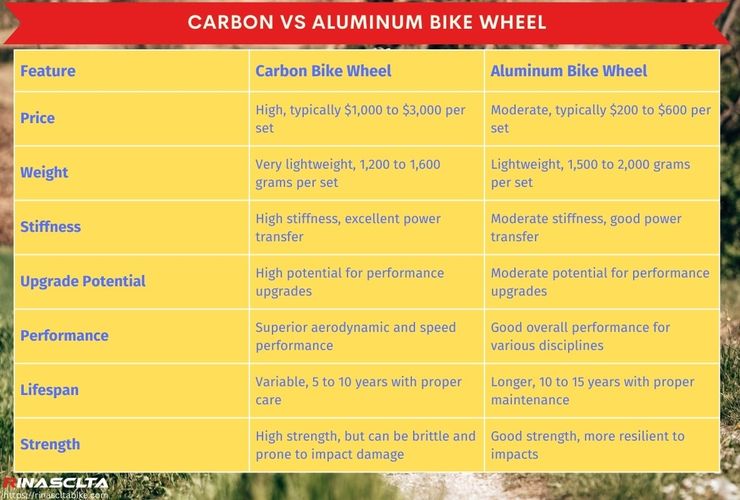
A. Weight and Impact on Acceleration and Climbing
- Average Weight:
- Aluminum clincher wheelset: 1,600–1,900 grams (Source: Permeants Bikes)
- Carbon wheelset of similar depth: 1,200–1,500 grams (saving ~300 grams) (Source: Permeants Bikes)
- Stock aluminum wheelsets: ~2,000 grams vs ~1,500 grams for mid-range carbon.
- Implications:
- Weight savings at the rim translate directly into faster acceleration and climbing responsiveness.
- These benefits are most noticeable during long climbs and short bursts of high power, such as sprinting.
(Sources: Permeants Bikes, Cycling Weekly, The Pros Closet)
B. Aerodynamic Advantages
Carbon allows for deep-section rims (typically 40–60mm or more), which significantly reduce drag by improving airflow around the wheel. These optimized shapes deliver measurable gains:
- Wind tunnel tests reveal:
- 3–8 watts saved at 30 km/h
- 8–15 watts saved at 40 km/h (Source: Roadman Cycling)
- Time Savings:
- At ~30 km/h, expect to save 15–25 seconds per hour during endurance events.
Implications:
- Best suited for racers, time trialists, and triathletes riding in excess of 35 km/h over flat or rolling terrain.
- Recreational riders and commuters at slower speeds may not benefit significantly from the aero advantages.
(Sources: Canyon, Permeants Bikes, Roadman Cycling)
C. Stiffness and Ride Feel
- Carbon Wheels offer superior stiffness, resulting in:
- Enhanced responsiveness in cornering.
- Improved power transfer during sprints.
- A “snappier” feel, valuable to sprinters and powerful riders. (Sources: Mantel, The Lost Co)
- Aluminum Wheels:
- Offer more forgiveness, making them better suited for comfortable and casual rides. (Source: Canyon)
D. Braking Performance (Historical vs Disc)
- Rim-Brake Bikes:
- Aluminum offers better wet braking and heat dissipation, making it ideal for long descents/poor weather.
- Modern Disc Brakes:
- Neutralizes braking differences in dry/wet conditions between carbon and aluminum rims.
(Sources: Canyon, The Lost Co)
III. Durability & Longevity
A. Differences in Impact Resistance
- Aluminum dents or bends, which is less catastrophic and visible post-damage. (Source: Canyon, The Lost Co)
- Carbon resists fatigue better but can crack explosively under sufficient stress. (Sources: The Lost Co, The Pros Closet)
B. Maintenance and Repairs
- Aluminum is repairable with common tools and skills.
- Carbon damage may require professional inspection or replacement, raising long-term costs. (Sources: The Lost Co, The Pros Closet)
IV. Cost Analysis: Are Carbon Wheels Worth It?
- Aluminum Wheelsets: $100–$700 (Source: Permeants Bikes)
- Carbon Wheelsets:
- Entry-level: $500–700
- Mid-range: $1,000–$2,500 (Source: The Pros Closet)
- Cost-per-performance: Carbon delivers better aero per watt, while aluminum often offers better value for durability and reliability.
V. Which Wheels Are Best for You?
When Carbon Makes Sense:
- Competitive racers riding >35 km/h.
- Riders prioritizing weight savings for climbing.
When Aluminum Makes Sense:
- Budget-conscious riders who value reliability.
- Casual riders or commuters encountering rough roads.
VI. Practical Framework for Decision-Making
- Clarify your primary riding purpose.
- Assess your speed and terrain requirements.
- Set a realistic budget.
- Choose wheels based on brake type and conditions.
- Evaluate quality, warranties, and sourcing.
Conclusion
The choice between carbon wheels vs aluminum wheels comes down to your cycling goals. While carbon wheels deliver premium performance benefits in speed, aerodynamics, and weight, aluminum wheels provide unmatched reliability and long-term affordability. By applying the decision framework provided, you’ll choose the wheelset perfectly suited to your needs.
Ready to level up your ride? Share this guide with your cycling community to help others make the ultimate wheel upgrade decision!
Frequently Asked Questions
Are carbon wheels really faster than aluminum?
Yes, in most performance scenarios. Their aerodynamic shape reduces drag, and their lower weight improves acceleration and climbing. The benefits are most significant at higher speeds (over 35 km/h) and during competitive events.
Do carbon wheels break easily?
Not necessarily. Modern carbon wheels are incredibly strong and durable for their intended use. However, unlike aluminum which tends to bend or dent upon severe impact, carbon can crack or fail catastrophically. For this reason, aluminum is often preferred for training or riding on very rough surfaces.
Are expensive carbon wheels worth it for a beginner?
For most beginners, a high-quality aluminum wheelset is a better investment. It offers durability, reliability, and excellent performance for its cost. Carbon wheels are a “marginal gain” upgrade best appreciated by experienced or competitive riders looking to maximize their performance.
What’s better for climbing, carbon or aluminum wheels?
Carbon wheels are generally better for climbing due to their significant weight savings. Lighter wheels require less effort to spin uphill, which can lead to faster climbing times and reduced fatigue on long ascents.

