Estimated reading time: 7 minutes
Key Takeaways
- The three main MTB wheel sizes are 26-inch, 27.5-inch (650B), and 29-inch (29er), each offering distinct ride characteristics.
- 29-inch wheels provide the best obstacle rollover, momentum, and traction, making them ideal for XC and high-speed trails.
- 27.5-inch wheels offer a balance between the agility of 26-inch wheels and the rollover capability of 29-inch wheels, suiting playful and technical riding.
- 26-inch wheels are the most nimble and responsive but are less common on modern adult MTBs, now mostly found on older bikes, dirt jumpers, or for smaller riders.
- Wheel selection should also consider tire width, rim width, frame geometry, and rider height for optimal performance.
Table of Contents
- What Do Mountain Bike Wheel Dimensions Mean?
- MTB Wheel Size Chart and Specifications
- 26-Inch Mountain Bike Wheels
- 27.5-Inch Mountain Bike Wheels
- 29-Inch Mountain Bike Wheels
- Side-by-Side Comparison: 26 vs. 27.5 vs. 29
- Technical Impacts of Wheel Diameter
- MTB Tire and Rim Width Charts
- How to Choose the Best MTB Wheel Size
- Conclusion
- Frequently Asked Questions
Mountain Bike Wheel Sizing Chart: The Definitive Guide to MTB Wheel Dimensions
Understanding the mountain bike wheel sizing chart is crucial for selecting the right wheel size and setup for your MTB adventure. As the definitive comparison resource, this guide thoroughly examines the three primary MTB wheel sizes—26 inches, 27.5 inches, and 29 inches—and explains how they impact ride quality, speed, handling, traction, and technical performance.
Wheel size, however, is only part of the picture. Factors such as tire width, rim width, frame geometry, suspension design, and rider size collectively influence the bike’s performance. This article aims to provide a comprehensive step-by-step breakdown to help you understand MTB wheel dimensions and choose the perfect configuration for your needs.
What Do Mountain Bike Wheel Dimensions Mean?
To make educated decisions about mountain bike wheels, it’s important to understand what MTB wheel dimensions specify. Wheel size is often listed in formats such as 29 × 2.4, where:
- 29 represents the approximate outside diameter of the tire (in inches).
- 2.4 refers to the approximate width of the tire (in inches).
Important Details to Know:
- The stated diameter refers to the tire’s diameter when mounted and inflated—not the actual rim diameter.
- Measurements can vary due to tire model, casing, rim width, and inflation pressure.
- For example, a “29-inch” tire does not always measure exactly 29 inches—it depends on how it interacts with rim width and air pressure.
Learn more from Trek’s MTB Buyer Guide here. For additional context on how wheel material impacts performance, explore our guide on carbon fiber wheels.
MTB Wheel Size Chart and Specifications
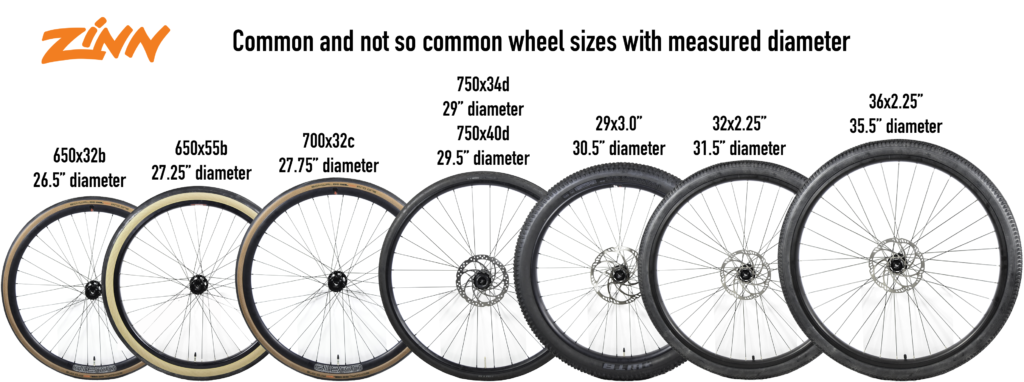
The mountain bike wheel size chart provides a comparative visual of the three main wheel sizes—26 inches, 27.5 inches, and 29 inches—along with their key specifications.
| Wheel Size | Approximate Tire Diameter (mm) | Approximate Circumference (mm) | Typical Characteristics |
|---|---|---|---|
| 26 in | 660 mm | 2,074 mm | Quick handling, compact fit, less common on new adult MTBs |
| 27.5 in | 699 mm | 2,196 mm | Balanced handling, agility, and rollover ability |
| 29 in | 737 mm | 2,315 mm | Efficient rolling, strong traction, smoother obstacle clearance |
Notes on the Chart:
- The circumferences are calculated using C = πd, which provides a relative size comparison.
- Actual tire dimensions differ based on width, tread pattern, and tire design.
For a deeper understanding of rim width and tire compatibility, see our guide on rim width and tire compatibility.
26-Inch Mountain Bike Wheels
26-inch MTB wheels are the original standard but have become less common on modern adult bikes over time.
Advantages:
- Fast and responsive steering.
- Lower rotational mass for quick acceleration.
- Easier to fit on small frames.
- Widely available replacement parts for older bikes.
Disadvantages:
- Steeper angle for rocks, roots, or depressions, reducing rollover capability.
- Smaller tire contact patch, which may affect traction.
- Rarely found on modern complete adult MTBs.
Best Suited For:
- Smaller riders and compact bike frames.
- Older MTB models or vintage bikes.
- Dirt jump, pump track, and specialized freeriding disciplines.
- Riders who prioritize quick handling over obstacle rollover performance.
For context on how 26-inch wheels compare to newer innovations, check out this info on 32-inch bicycle wheels.
27.5-Inch Mountain Bike Wheels
Often called 650B, 27.5-inch wheels are positioned as the middle ground between smaller 26-inch and larger 29-inch wheels.
Advantages:
- Agile and more maneuverable compared to 29-inch wheels.
- Better rollover capability than 26-inch wheels.
- Relatively easy to handle in technical or tight terrain.
- Offers balanced acceleration, traction, and control.
- Suitable fit for medium-height riders.
Disadvantages:
- Slightly less efficient in rolling over obstacles compared to 29-inch wheels.
- May have fewer options and availability in certain categories.
Best Suited For:
- Technical singletrack riding.
- Trail riding that requires agility and maneuverability.
- Riders who prefer playful handling.
- Smaller and medium-height riders.
For detailed guidance on 27.5 wheelsets, explore our 27.5 wheelset buying guide.
29-Inch Mountain Bike Wheels
Known as 29ers, 29-inch MTB wheels dominate modern mountain biking due to their superior ability to roll over obstacles and maintain speed.
Advantages:
- Easily rolls over roots, rocks, and depressions.
- Improved momentum retention and energy efficiency.
- Longer contact patch for better traction during climbs and descents.
- Stability at higher speeds.
- Smoother obstacle clearance enhances control during technical climbs or descents.
Trek notes: 29-inch wheels roll faster and smooth obstacles, while 27.5-inch wheels feel nimbler. [Source]
Disadvantages:
- Slower steering response compared to smaller wheels.
- Challenging to integrate into very small frames.
- Require added clearance for the frame, fork, and rear triangle.
- Heavier overall wheel-and-tire setups compared to smaller sizes.
Best Suited For:
- Cross-country riders seeking efficiency over long distances.
- High-speed descents and technical trail conditions.
- Root-filled or rocky terrain.
- Taller riders or riders prioritizing maximum traction and stability.
For comprehensive information on 29-inch carbon wheelsets, visit our comprehensive guide on 29-inch carbon wheelsets.
Side-by-Side Comparison: 26 vs. 27.5 vs. 29
A comprehensive comparison of key performance differences across the three wheel sizes is outlined below.
| Performance Factor | 26-inch | 27.5-inch | 29-inch |
|---|---|---|---|
| Agility | Highest | High | Moderate |
| Obstacle Rollover | Lowest | Moderate | Highest |
| Stability | Lowest | Moderate | Highest |
| Acceleration | Quick | Balanced | Momentum-Oriented |
| Traction Potential | Lower | Moderate | High |
| Tight Corner Handling | Very Quick | Quick | Deliberate |
| Availability | Limited | Common | Very Common |
Notes:
- General tendencies only represent typical behavior; tire construction, geometry, rider technique, and trail conditions can influence differences more radically.
For specific wheelset recommendations by wheel size, explore our 29″ MTB wheelset buyer guide and 26″ MTB wheels buying guide.
Technical Impacts of Wheel Diameter
Speed and Rolling Efficiency:
Larger wheels maintain speed over obstacles better, reducing sudden deflection and rider fatigue during extended trail rides.
Handling:
Small wheels are quicker for sharp turns and tight trails, while larger wheels offer smoother, stable steering in open terrain.
Traction:
A larger tire generates a longer contact patch, improving grip—but terrain, tire pressure, and tread design remain key factors.
For more on how carbon construction affects these technical factors, see our ultimate carbon MTB wheels guide.
MTB Tire and Rim Width Charts
Tire Width vs. Rim Width:
Matching tire width with rim width is essential for proper fit and performance. Maxxis defines specific ranges: [Source].
| Use | Tire Width | Recommended Rim Width |
|---|---|---|
| XC Racing | 2.00–2.20 in | 20–25 mm |
| Light Trail | 2.20–2.40 in | 25–30 mm |
| Enduro | 2.30–2.50 in | 28–35 mm |
For more detailed rim width specifications, consult our bicycle rim width and tire size chart.
How to Choose the Best MTB Wheel Size
Factors to Consider:
The ideal MTB wheel size depends on terrain, riding style, frame, and personal preference. Consult frame and tire specs before deciding.
Quick Reference Table:
| Terrain/Bike Use | Preferred Sizes |
|---|---|
| Tight Trails | 27.5 in |
| Long-Distance XC | 29 in |
| Small Frames | 26 in or 27.5 in |
| Technical Trails | 27.5 in |
| High-Speed Descents | 29 in |
Conclusion
A mountain bike wheel sizing chart is your ultimate guide for understanding and selecting the right wheels based on size, terrain, and rider height. When choosing MTB wheels, consider factors such as frame geometry, rider style, and technical specs to find your ideal fit.
For every MTB enthusiast, this mountain bike wheel size guide simplifies complex decisions into actionable insight, ensuring both compatibility and performance. Use the provided charts and manufacturer specifications to further refine your preferences.
To explore how different wheel materials like carbon fiber can enhance your MTB performance, visit our review of carbon mountain bike rims.
Frequently Asked Questions
Q: What are the main mountain bike wheel sizes?
A: The three primary MTB wheel sizes are 26-inch, 27.5-inch (also known as 650B), and 29-inch (or “29er”). Each has unique characteristics influencing handling, speed, and obstacle rollover.
Q: Which wheel size is best for beginners?
A: For most beginners of average height, a 29-inch wheel is a great starting point due to its stability and ability to roll over obstacles easily, which can build confidence. However, shorter riders might find a 27.5-inch wheel more manageable and comfortable.
Q: Do taller riders need 29-inch wheels?
A: While not a strict rule, taller riders (typically over 6 feet or 183 cm) often benefit from 29-inch wheels. The larger frame sizes required for taller riders accommodate 29ers well, and the proportions feel more balanced, providing better stability and traction.
Q: What is a “mullet” or “MX” setup?
A: A “mullet” or Mixed Wheel (MX) setup combines a 29-inch wheel in the front with a 27.5-inch wheel in the rear. This configuration aims to provide the best of both worlds: the excellent rollover and traction of a 29er at the front, and the nimble, playful handling of a 27.5-inch wheel at the back.